NETWORK AND INTERNET · STRUCTURED CABLING
OLTS and OTDR in Fiber Backbone Acceptance: Which Measurement Represents What?
In fiber backbone acceptance, OLTS measures the total insertion loss; OTDR helps examine events and their locations on the line. One does not undertake all the duties of the other. Acceptance criteria should be determined together with the application to be used, fiber type, length and project specification. Just a connection light coming on or a single screenshot is not enough proof of delivery.
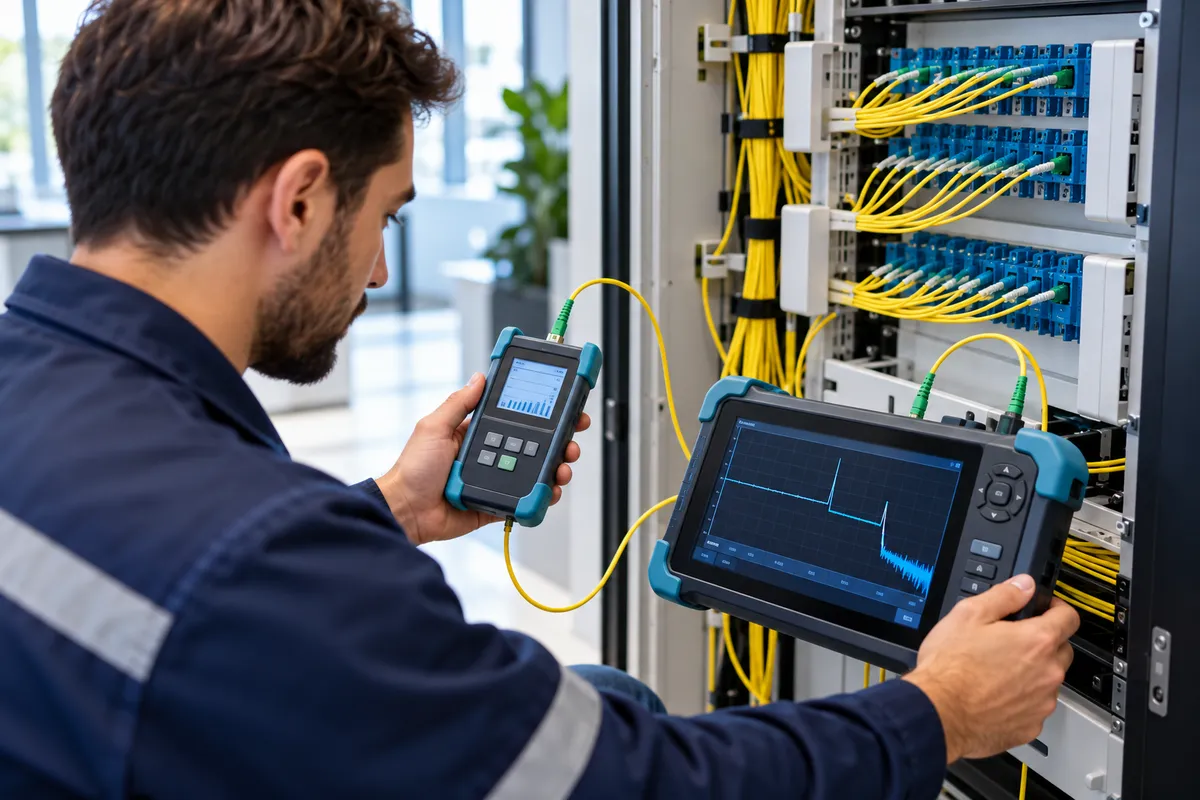
Write down the test scope before measurement
Identify the two ends of the line to be measured, fiber ID, connectors and included patch cords. The wavelength, reference method, and selected limit should appear in the report. Do not carry over the general loss value used in a previous project as the acceptance limit of the new line. The application requirement and the limits of the wiring standard may not answer the same question.
Fluke Networks explains how total loss measured with an OLTS is compared with application limits. If the specification requires OTDR characterization, that must also be included in the handover scope. Source examples of device speed are not generalized to all products or Quad field performance.
Sample acceptance table
| control | Information to be recorded | decision |
|---|---|---|
| Line ID | Start, end, fiber number | Label and report must match |
| OLTS | Wavelength, reference, loss, limit | Document the source of the limit |
| OTDR | Event trace, measurement direction, test setup | Match with desired scope |
| Conclusion | Pass/fail, explanation, retest | Measure again when the problem is resolved |
The reason why a fixed dB acceptance limit is not given in the example is that not every backbone is the same. Verify that the automatic limit the device selects is correct for your project. Preserve raw report file, device and measurement information; Do not archive the photo that just says “PASS”.
Separate fault finding from acceptance
Locating an event with OTDR does not mean that total loss measurement is unnecessary once the problem is corrected. A dirty lead, improper connection or damaged cable requires separate inspection. Add the action and repeat measurement to the solution record. The measuring equipment used and its calibration status must be verified upon delivery with the offer.
For copper reports data cabling test report You can read the guide. Fiber acceptance file structured cabling Also ask during discovery. This article is not a standard text or a certificate of conformity for a particular line.
Clarify the survey and handover scope
Contact Quad Bilişim; Evaluate the current plan, device list, and expected delivery output together.
Technical resources
Sources reviewed: November 1, 2026. The assessment table, procedure and hypothetical example are original Quad Bilişim working suggestions, without a price or outcome guarantee.